“Annual Produce” search results (1000)

Start with coffee beans (28)-Africa-C ô te d'Ivoire
In terms of quantity, it is one of the largest producers in the world. C ô te d'Ivoire te dlvoire has never produced the best quality coffee, and it rarely comes from Arabian coffee trees. In the early 1980s, it was the world's third-largest coffee producer, with an annual output of 5 million bags. Even today, it is still the fifth largest coffee producer in the world, with an annual output of 4.4 million bags. That's it.
2014-06-12 Coffee beans Africa C ô te d'Ivoire
Planting conditions of coffee trees what cups do lattes and cappuccinos use
However, not all the land located in this area can produce good coffee trees. The ideal planting conditions of coffee trees are as follows: the temperature is between 15 ℃ and 25 ℃, and the annual rainfall must reach 1500 mm to 2000 mm. At the same time, the rainfall time should be in line with the flowering cycle of coffee trees. Of course, in addition to the coordination of seasons and rainfall, there should be fat work.
2016-06-06 Coffee planting conditions lattes Cabo Chino what cups but not
Coffee producing area Coffee introduction to C ô te d'Ivoire
In terms of quantity, it is one of the largest producers in the world. C ô te d'Ivoire te dlvoire has never produced the best quality coffee, and it rarely comes from Arabian coffee trees. In the early 1980s, it was the world's third-largest coffee producer, with an annual output of 5 million bags. Even today, it is still the fifth largest coffee producer in the world, with an annual output of 4.4 million bags. That's it.
2014-11-05 Coffee knowledge coffee origin coffee introduction C ô te d'Ivoire
Ethiopian Coffee Flavor and Taste introduction of fine coffee beans in Ethiopian coffee producing areas
Coffee is Ethiopia's most important export cash crop and the main source of Ethiopia's foreign exchange earnings. Ethiopia's coffee exports account for about 3% of the world market, making it the eighth largest coffee exporter in the world. Coffee exports increased steadily from 58000 tons in 1990 to 110000 tons in 1995-1996 and remained at this level in the following years. 2001-2002
2016-07-29 Ethiopia coffee flavor taste introduction producing area boutique coffee beans
Annual High altitude Rose Summer Coffee in the Baru Volcano region of Panama
Panamanian coffee originated in 1780, when European immigrants introduced the first Tipica tree species. Located in Central America, with the natural advantages of sunshine, land and mountains, coupled with a sufficient working population, the region is an excellent area for growing and producing high-quality boutique coffee, and it is a paradise for coffee. In particular, the Geisha coffee from Panama has led to the global customs.
2016-05-03 Panama Baru volcano producing area age altitude rose summer coffee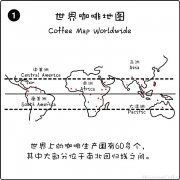
Ivorian coffee is still the fifth largest coffee producer in the world today.
In terms of quantity, it is one of the largest producers in the world. C ô te d'Ivoire has never produced the best quality coffee, and it rarely comes from Arabian coffee trees. In the early 1980s, it was the world's third-largest coffee producer, with an annual output of 5 million bags. Even today, it is still the fifth largest coffee producer in the world, with an annual output of 4.4 million bags. That's it.
2016-05-21 Ivory Coast coffee today is still in the world the top five producing countries quantity
C ô te d'Ivoire is one of the largest producers of coffee in the world.
One of the largest producers in the world. C ô te d'Ivoire te dlvoire has never produced the best quality coffee, and it rarely comes from Arabian coffee trees. In the early 1980s, it was the world's third-largest coffee producer, with an annual output of 5 million bags. Even today, it is still the fifth largest coffee producer in the world, with an annual output of 4.4 million bags. With regard to the production of Robbins special coffee
2015-07-30 Coffee origin C ô te d'Ivoire the world large producing countries one of the world
Ethiopian Coffee Flavor and Taste introduction of fine coffee beans in estates of Ethiopian coffee producing areas
Coffee is Ethiopia's most important export cash crop and the main source of Ethiopia's foreign exchange earnings. Ethiopia's coffee exports account for about 3% of the world market, making it the eighth largest coffee exporter in the world. Coffee exports increased steadily from 58000 tons in 1990 to 110000 tons in 1995-1996 and remained at this level in the following years. 2001-2002
2016-07-27 Ethiopia coffee flavor taste introduction producing area manor boutique coffee beans
Ivory Coast, the country that has never produced the best quality coffee
In terms of quantity, it is one of the largest producers in the world. The coffee produced in C ô te d'Ivoire (C ô te d te dlvoire) is also rarely produced by Arabian coffee trees. In the early 1980s, it was the world's third-largest coffee producer, with an annual output of 5 million bags. Even today, it is still the fifth largest coffee producer in the world, with an annual output of 4.4 million bags. In terms of the output of Robbins Coffee
2016-06-17 Never production quality best coffee country of production C ô te d'Ivoire quantity in terms of world
Evaluation of high-quality coffee beans altitude determines the quality of coffee
As the birthplace of tea culture in China, the idea of good tea from high mountains is deeply rooted in the hearts of the people, so if it is mentioned that high mountains produce good coffee, there should be a lot of people who agree with it. In fact, many low-altitude areas can also produce top-quality coffee. Under the premise of complete air temperature, rainfall, topography and soil, coffee trees especially like the microclimate characteristics of frequent fog and large temperature difference between day and night.
2015-03-16 Boutique coffee beans evaluation altitude decision coffee quality China as
Dominica Coffee with excellent acidity and pleasant fragrance the characteristics of the manor production area
Turning to the introduction of Dominican coffee, the most distinctive features are fresh and elegant, full of particles, excellent acidity and pleasant flavor (two colleagues agree with this). Such flavor characteristics are not only related to the variety and the quality of the soil, but also closely related to the picking and handling of raw beans. Dominica's coffee is selected by the most expensive manual method, workers.
2016-10-07 Acidity excellent fragrance Human Dominica Coffee Grinding processing Taste Zhuang
Ivory Coast Roberts Coffee West Africa Ivorian Robusta coffee beans Ivorian producing areas
In terms of quantity, it is one of the largest producers in the world. C ô te d'Ivoire te dlvoire has never produced the best quality coffee, and it rarely comes from Arabian coffee trees. In the early 1980s, it was the world's third-largest coffee producer, with an annual output of 5 million bags. Even today, it is still the fifth largest coffee producer in the world, with an annual output of 4.4 million bags. That's it.
2016-01-15 Kurt Varro Baiji Coffee West Africa Busta Coffee beans C ô te d'Ivoire producing areas
Acidity and texture of Sidamo Coffee Bean Flavor taste the characteristics of the manor producing area introduce Sidamo Shakiso
Coffee is Ethiopia's most important export cash crop and the main source of Ethiopia's foreign exchange earnings. Ethiopia's coffee exports account for about 3% of the world market, making it the eighth largest coffee exporter in the world. Coffee exports increased steadily from 58000 tons in 1990 to 110000 tons in 1995-1996 and remained at this level in the following years. 2001-2002
2016-08-06 Acidity texture Dharma coffee beans flavor taste manor producing area characteristics introduction
Introduction to the flavor and taste characteristics of the fresh, elegant and full-grained Dominica coffee manor
The Baez regime was overthrown in 1874, but was elected president two years later and finally stepped down in 1878. General Ulysses Errou came to power in 1882, which gradually stabilized the political situation in Dominica, which had been uneasy for many years. During the reign of President Errou, the political stability gave many countries a respite, and the continuous improvement of sugar industry technology resulted in many European countries.
2016-08-24 Fresh elegant granular full Dominica coffee manor producing area flavor mouth
The taste of Ethiopian coffee with the aroma of dried fruit. Ethiopian coffee products are introduced in the manor area.
Coffee is Ethiopia's most important export cash crop and the main source of Ethiopia's foreign exchange earnings. Ethiopia's coffee exports account for about 3% of the world market, making it the eighth largest coffee exporter in the world. Coffee exports increased steadily from 58000 tons in 1990 to 110000 tons in 1995-1996 and remained at this level in the following years. 2001-2002
2016-07-26 Dried fruit fragrant Ethiopia coffee flavor taste manor producing area introduction
Where is the coffee tree suitable for production and what weather conditions do you need?
The planting conditions of coffee trees, however, not all the land located in this area can produce good coffee trees. The ideal planting conditions of coffee trees are as follows: the temperature is between 15 ℃ and 25 ℃, and the annual rainfall must reach 1500 mm to 2000 mm. At the same time, the rainfall time should be in line with the flowering cycle of coffee trees. Of course, except for the matching of seasons and rainfall
2016-06-03 Coffee where more suitable production need have what weather article
Introduction to the characteristics of Dominica Coffee Flavor Manor
The earliest coffee in Dominica was introduced from Martinique (the overseas province of France), dating back to the early 18th century. Dominica is an island country with a tropical climate. The temperature changes little throughout the year. Except for the lower temperature in the Central Cordillera Mountains, which can reach less than 0 ℃ in winter, the annual average temperature in other areas is between 25 and 30 ℃, which is affected by the mountain topography.
2016-07-25 Smooth smooth Dominica coffee flavor taste manor producing area characteristics introduction
Introduction to manors in coffee flavor and taste producing areas of Dominica
The Dominican Republic has also experienced a history of unrest and poverty, and now the country has implemented democratic elections and entered a period of stable development, but it has not yet formally established diplomatic relations with China, but has maintained so-called diplomatic relations with Taiwan. It seems that this has nothing to do with coffee, but in fact, it still has an impact. The exchanges between the two countries that have not established diplomatic relations are subject to many restrictions in all aspects, and of course they will.
2016-07-15 Dominica coffee flavor taste producing area manor introduction Republic
Coffee producing countries in Dominica introduce the flavor and taste characteristics of Santo Domingo coffee.
The earliest coffee in Dominica was introduced from Martinique (the overseas province of France), dating back to the early 18th century. Dominica is an island country with a tropical climate. The temperature changes little throughout the year. Except for the lower temperature in the Central Cordillera Mountains, which can reach less than 0 ℃ in winter, the annual average temperature in other areas is between 25 and 30 ℃, which is affected by the mountain topography.
2016-07-02 Dominica coffee country of origin introduction Santo Mingo flavor taste characteristics many
Coffee Manor in Jamaica Silver Mountain Manor in St. Thomas
Jamaica is one of the small coffee producing regions in the world, with an annual harvest of about 40000 bags-60 kg / sack (most of the Jamaican Blue Mountain coffee is actually shipped away in 70 kg barrels, they are the last countries to still use this traditional packaging method, but they produce 60 kg/ sacks, as that is the international standard for measuring coffee production). Ratio
2016-07-12 Jamaica Coffee Manor producing area introduction Thomas Silver Mountain